You probably use food delivery apps like Deliveroo, Just Eat or Uber Eats. Some people use them every day, but the labour behind the convenience of this service is often taken for granted.
I interviewed ten delivery riders in London. We talked about their work routine, challenges of being a migrant, flexible work, unpaid labour. Inconveniences and advantages of this line of work. The kind of information that’s erased from the branded experience of digital platforms (Grant, Vodeb, 2023, p. 49).
Every rider I talked to was a migrant. In the context of machine learning “supposedly decolonized territories are […] reorganized as zones of extraction where workers’ rights cannot develop” (Bruder, 2021, p. 287). Similarly, the precarity of platform capitalism in developed countries seems to affect people from these same territories.
“People don’t know what it’s like working as a delivery rider”, said one of the workers. How would app users engage with stories about delivery riders in a public space, intervening in the “semiotics of the city” (Eichhorn, 2016, pp. 82) as opposed to the digital environment of delivery apps?
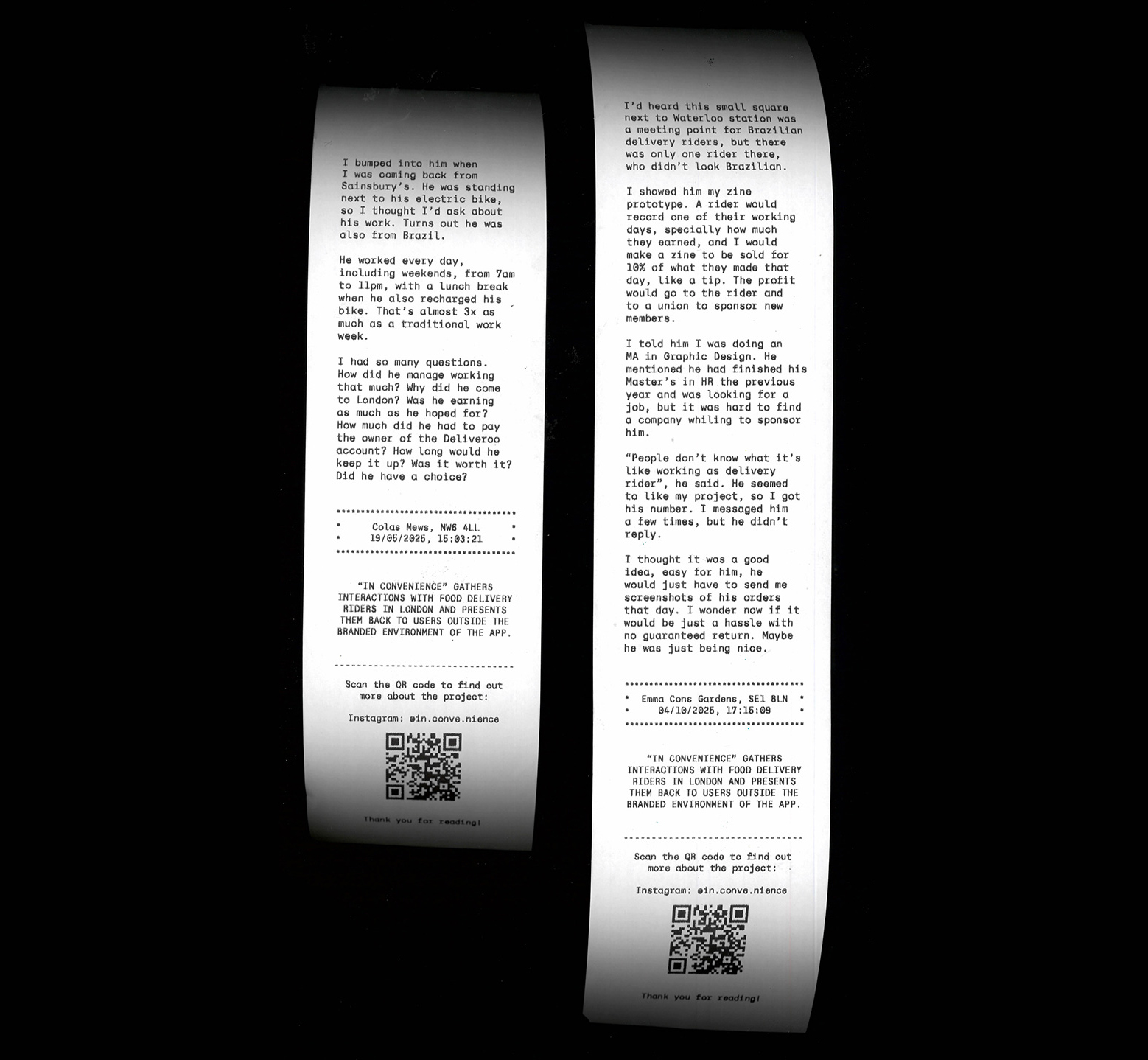
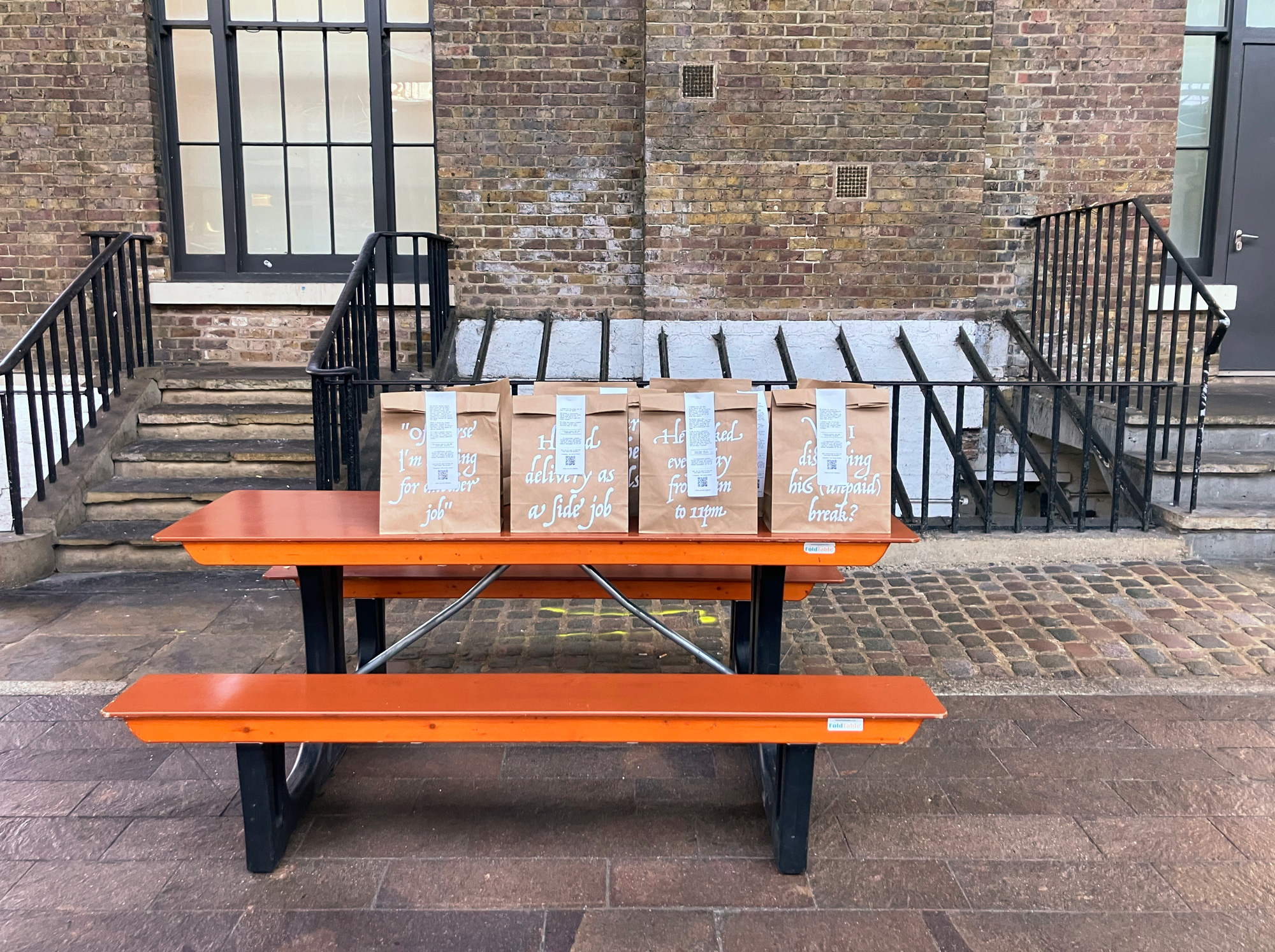
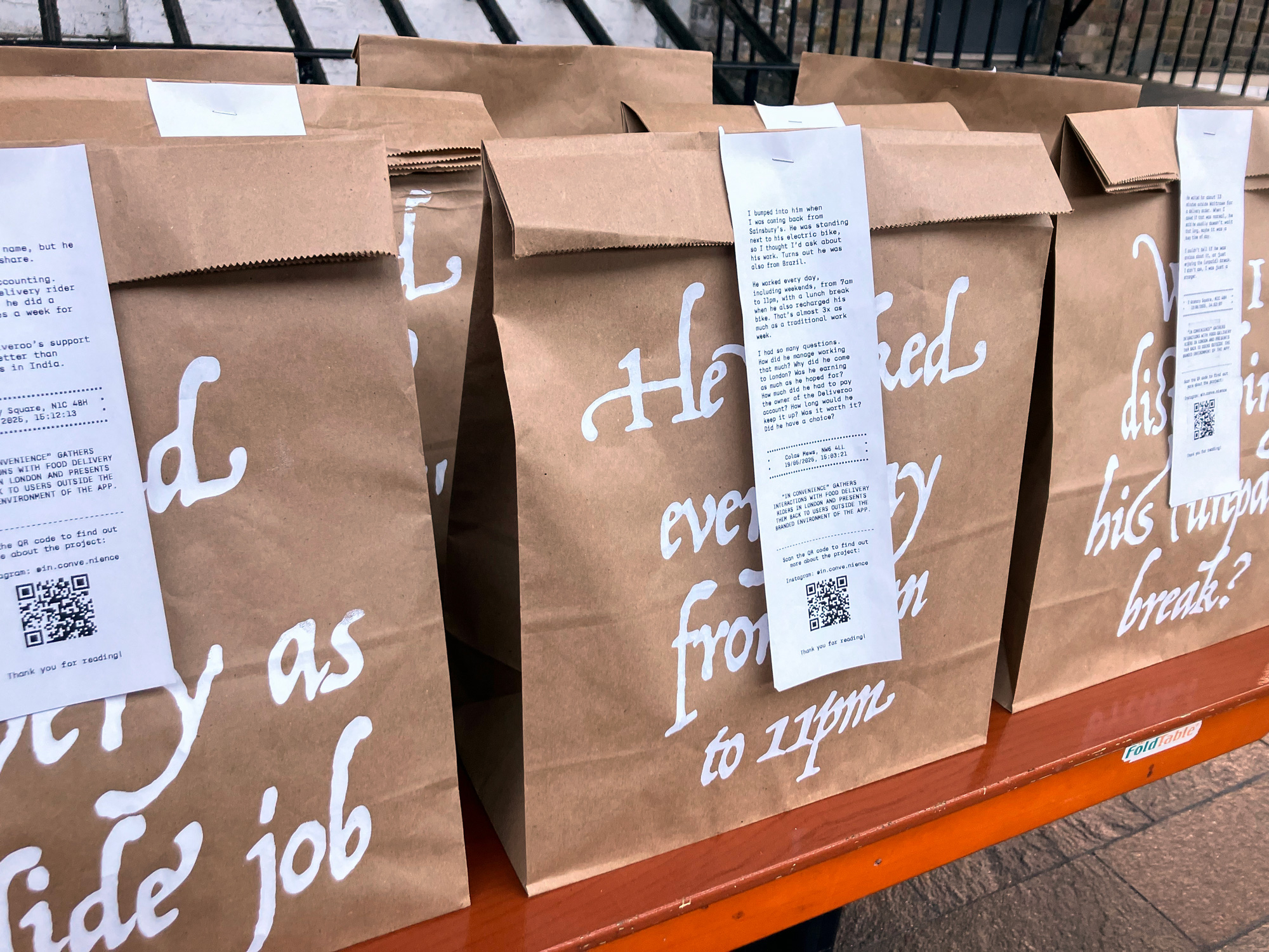
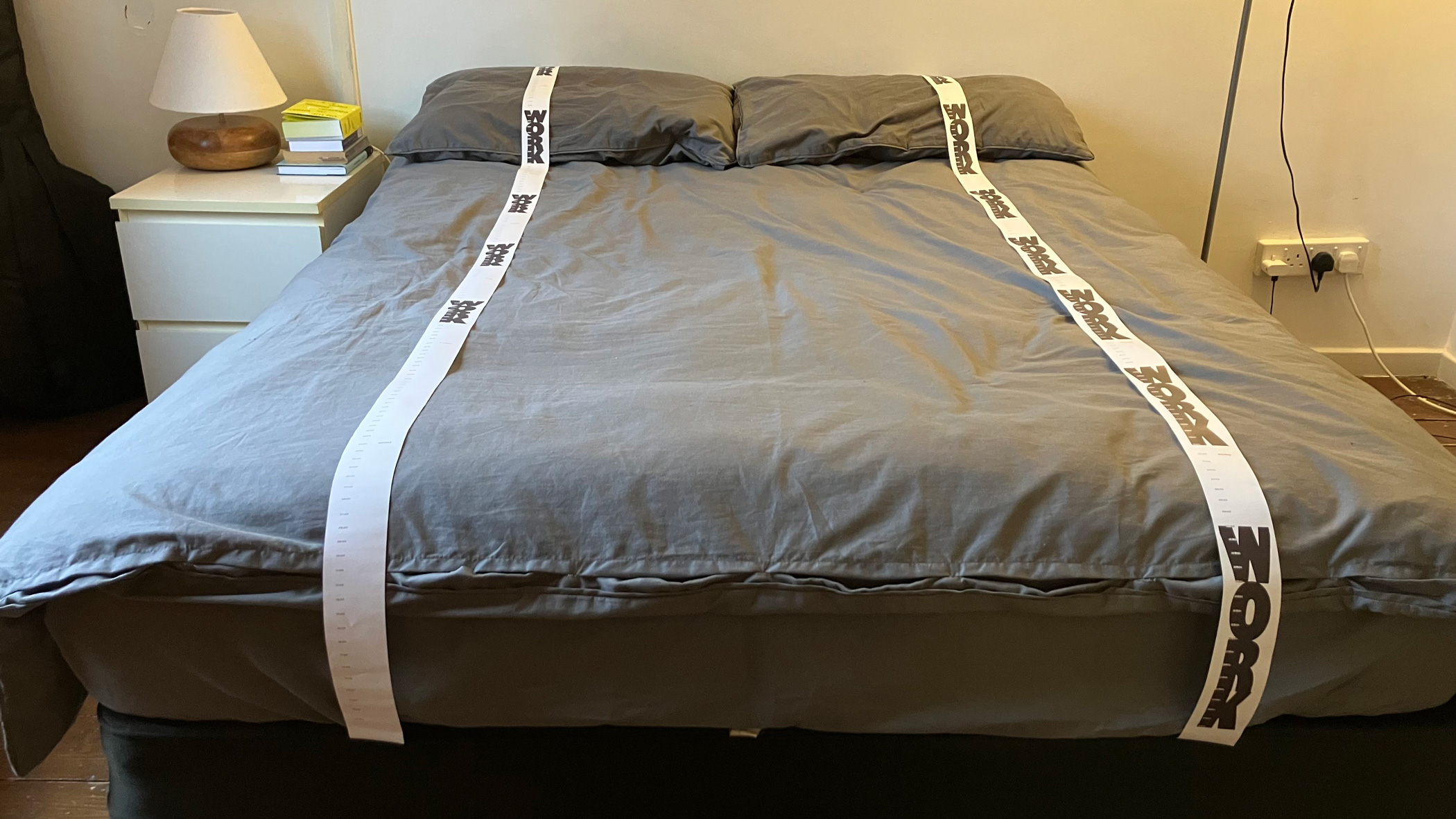
Choosing the exhibition format was influenced by what Ludovico calls the “persistence of […] physical presence” (Ludovico, 2025, p. 67). The installation displays ten stories based on the interviews, each one printed on receipt paper and stapled to a food delivery bag, both materials familiar to the delivery experience (Weber, 2025). QR codes provide opportunities to see other iterations of the project and further audience engagement on Instagram . The setting is a public space related to food, like a canteen, a market, a park. This is also a way to increase the chance of food delivery riders themselves engaging with the project.
Some interviews were quick interactions, others were longer conversations, as in-depth as my interrupting them during working-hours allowed. Without realising, I was being inconvenient, interrupting their breaks, disturbing the rare opportunities they have to rest.